分类目录归档:*****Replica Watches info

NEWEST UPGRADED 41MM ROLEX DATEJUST II&DAYDATE II SWISS REPLICA WATCHES

Hello my friends, Anyreplicawatches have been already come back to work, everything is back to normal now. I have to say this holiday has never been such long due to the Coronavirus disease (COVID-19) outbreak. But good news our country have been controlled it and is better and better than before. We also saw some cases happen abroad for some countries, hope everything well and keep safe for all.

Let’s back to the today’s topic: The factory produce 1:1 copy Rolex Datejust/Daydate watch 41mm.

QQ图片20200307112526

As you can expect from any Datejust, the best-selling family for Rolex since 1945, the Datejust 41 comes with either a smooth or a fluted bezel. There are a couple of versions of this watch in various metals and dial colors.

And now our factory produce 1:1 copy Rolex Datejust watch with 3235 automatic movement 41mm with thick 11.70mm for men after they Research & development for one year. What exciting news it is! Let’s see how does they upgrade of the watch, the most key points as below:

1. Same watch diameter 41mm as Original’s latest version of the 3235 series.

2. The band which is connected with the watch case is the same as the original, 5 pieces are assembled which is very hard to do it that it makes the strap and the case are connected seamlessly.

3. The thickness and radian of the case are the same as the original.

4. The buckle is the same as the original also with the spring is added inside. The font size and process are the same as the original.

5. Two dimensional code anti-counterfeiting is added to the side of the case same as the original, and two dimensional code for inspection is added to the bottom cover.

6. The case body at the connection between the case and the strap is engraved with the model number “126331” consistent with the original.

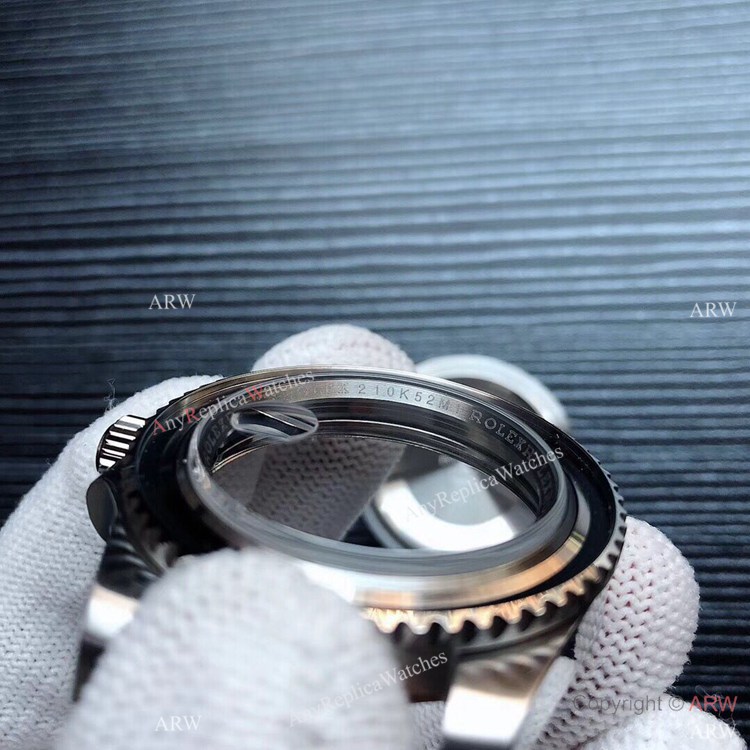
7. The inner bezel of the watch is engraved with the product flow number consistent with the warranty card, and make it as one watch, one card and one code consistent with the original product which are never repeated.)

8. Come with a complete set of original package configuration, including warranty card, instructions, model bar code are consistent with the original.

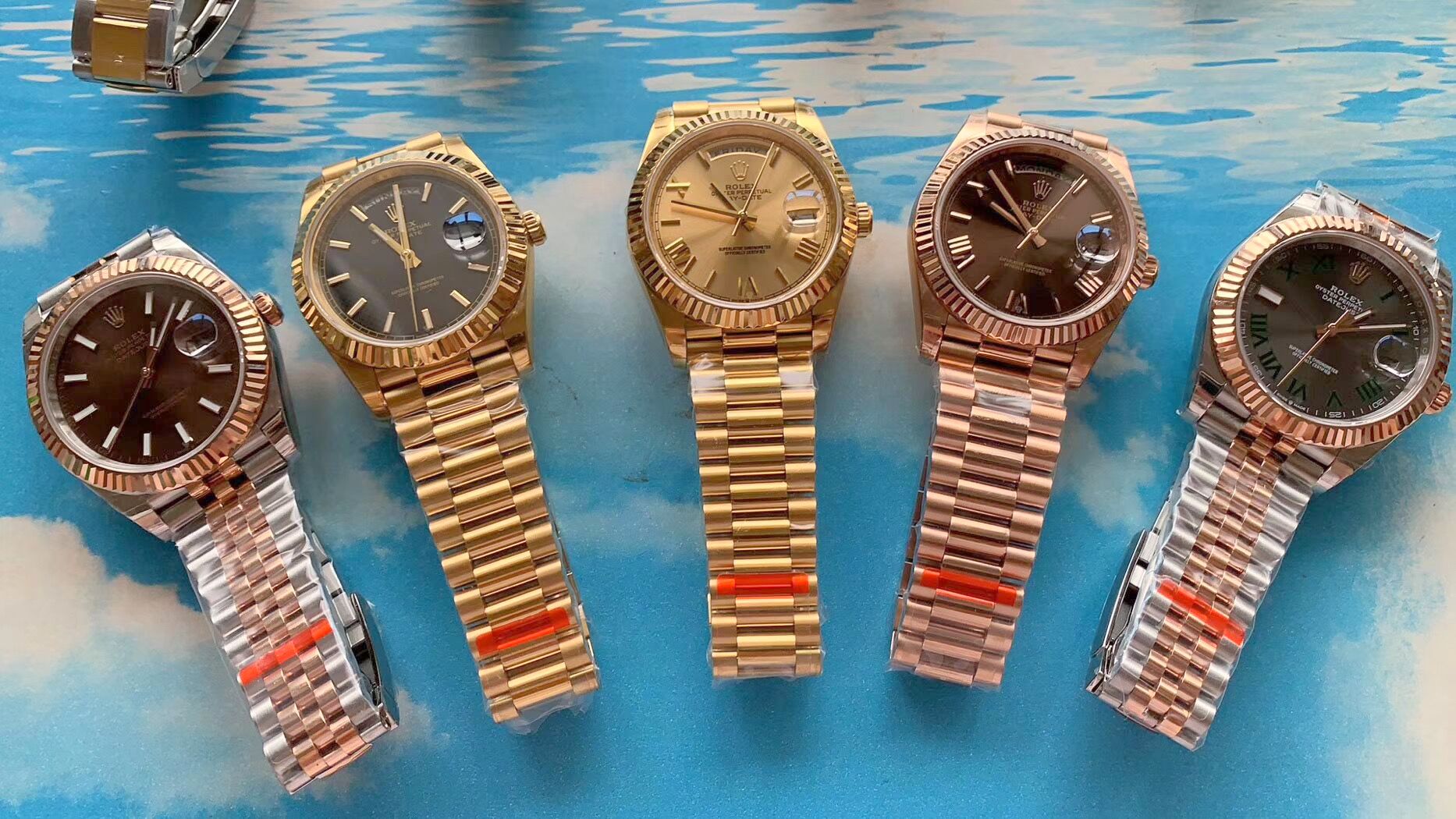
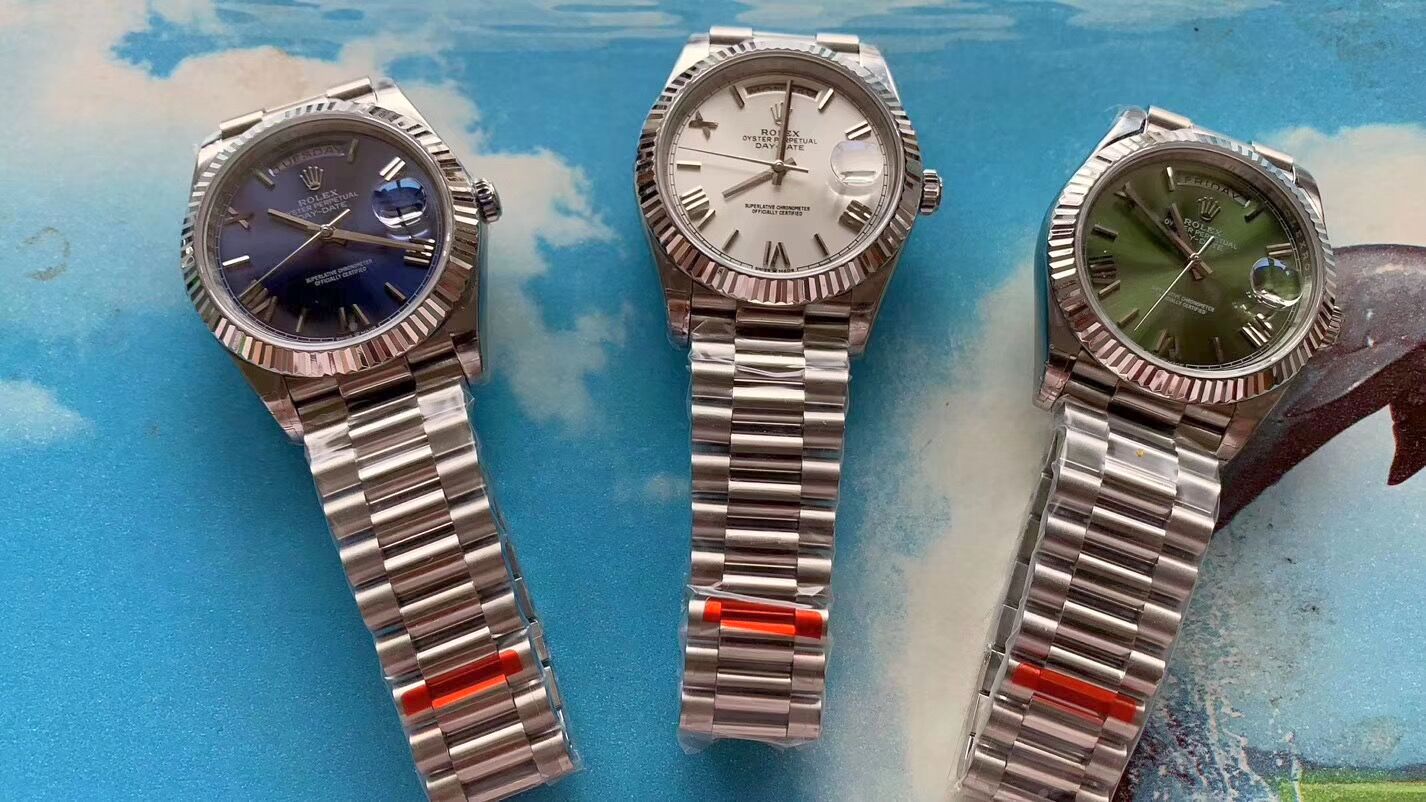
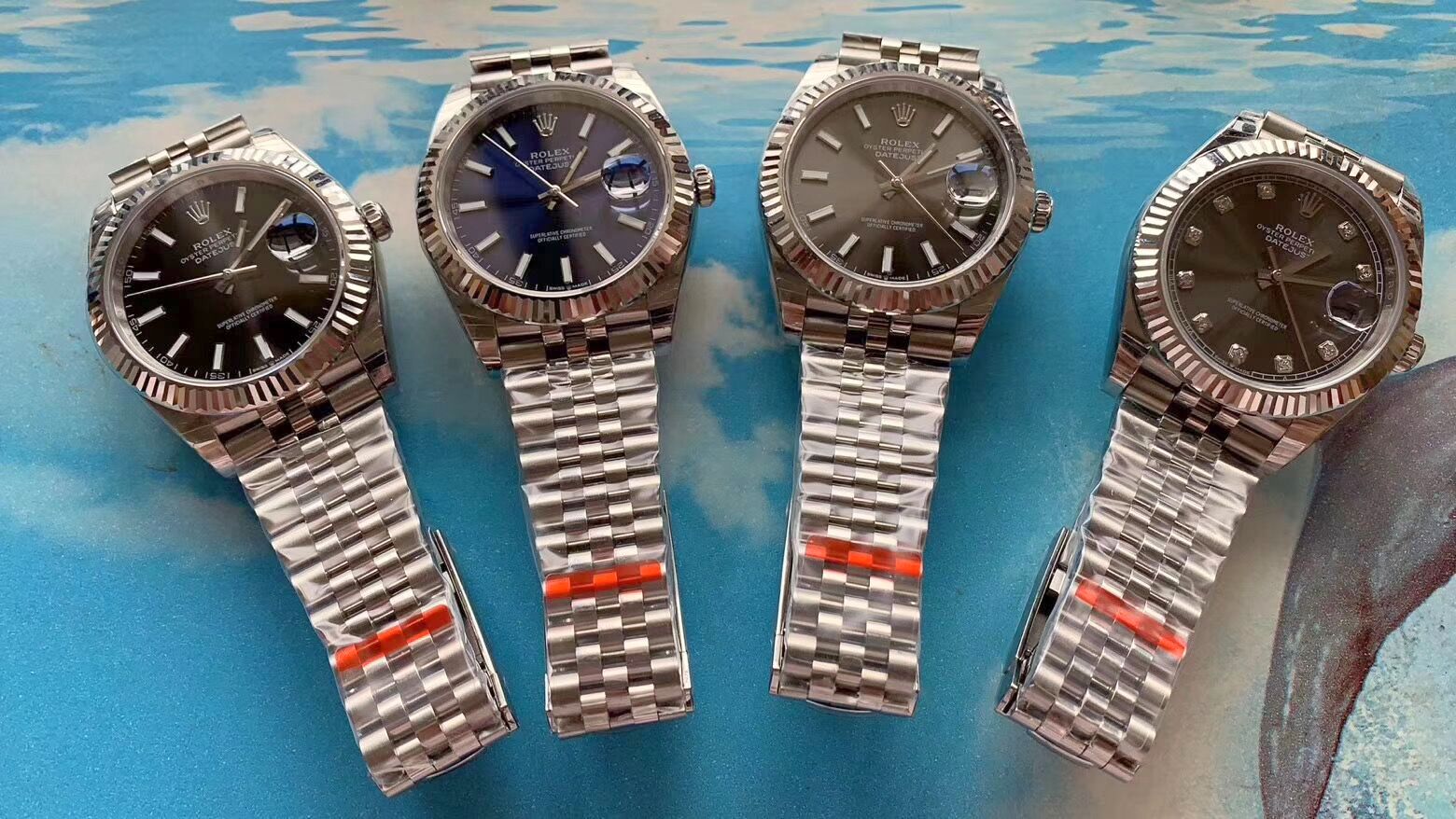
Also please find below pictures of different colors of the Rolex Datejust and Daydate watches, available in President band/Oyster band/Jubilee band:

QQ图片20200307112508

QQ图片20200307112504

QQ图片20200307112500

QQ图片20200307112457

QQ图片20200307112435

CONTACT US
Please feel free to contact us with any question of Warranty Repair, Defective Watch, Damaged Package, Lost Package , Pre-Sale or other Service.

Please feel free to contact us at theARWsale@gmail.com or ARWcustomerservice@gmail.com, We will get back to you shortly.

Please do not take the plastic off your copy watch when you received it. Check the quality and try it on first. Make sure everything is fine. If there is any problem, please contact us.

We only have ONE whatsapp account: +86 1342 8820 558 (Chris Lee).

Share This:

NEW ARRVIAL V10 NOOB ROLEX SUBMARINER DATE WATCH AVAILABLE

The new Rolex Submariner V10 from Noob factory has been released and is now available in our website. You can choose different color and movement online.

Noob has published their V10 Submariner which is the most popular Submariner in current market. Upon V8 and V9,  Noob updated a lot on this new V10 edition. I did not realize that Noob will publish the V10 edition so fast, I thought they will publish it in next year.

V10 Noob Rolex Submariner Green Swiss Replica Watches (1)

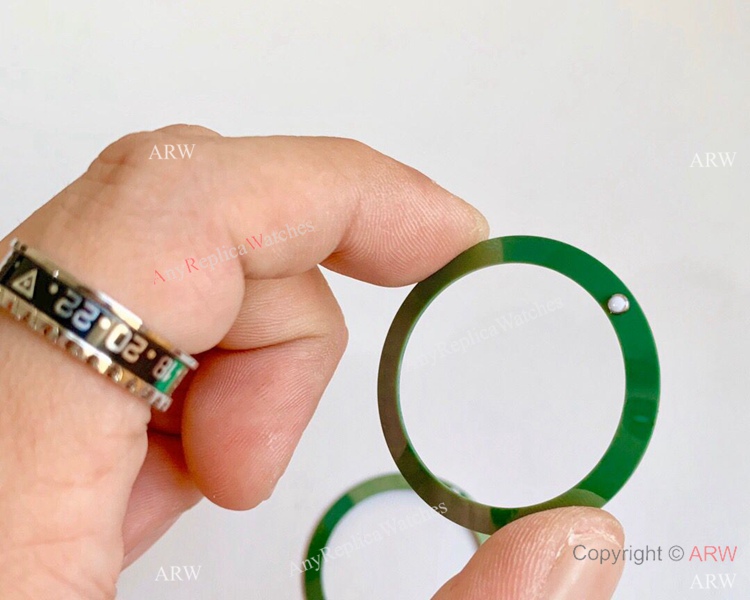
Back to the V10 Submariner Watch. The biggest change is made on the bezel, which Noob factory claims that is could be interchanged with the bezel of genuine Submariner(Exact same color as genuine).
The engraved depth of the bezel markers are the same as that of genuine Submariner, besides, the Platinum tone of the bezel markers will not fade as time goes by.


V10 Noob Rolex Submariner Green Swiss Replica Watches (2) V10 Noob Rolex Submariner Green Swiss Replica Watches (9)

About the movement, Noob offers three options, one is an Asia ETA 2836, and Real Swiss 2836, the other is a Super Clone 3135. All have a high quality.

V10 Noob Rolex Submariner Green Swiss Replica Watches (10)


V10 Noob Rolex Submariner Green Swiss Replica Watches (4)

Please read the following specification to know both watches better, and check a lot of photos below, including the details photo.

Movement: Super Clone 3135/Asia /Real Swiss ETA 2836 Automatic Movement
Case: 40mm Diameter, Solid 904L Stainless Steel watch case
Bezel: Uni-directional Rotating Green Ceramic Bezel
Crystal: Sapphire with Etched Crown Logo at 6 o’clock
Dial: Green dial with 2.5 times date window
Bracelet: Solid 904L Stainless Steel Oyster band with Rolex Deployment Clasp
Functions: Hours, Minutes, Seconds and Date

V10 Noob Rolex Submariner Green Swiss Replica Watches (3) V10 Noob Rolex Submariner Green Swiss Replica Watches (5) V10 Noob Rolex Submariner Green Swiss Replica Watches (6) V10 Noob Rolex Submariner Green Swiss Replica Watches (7) V10 Noob Rolex Submariner Green Swiss Replica Watches (8) V10 Noob Rolex Submariner Green Swiss Replica Watches (11)


Share This:

Watch Basics: 12 Parts Of a Watch You Should Know

To create a fine watch timepiece, a number of components must be designed, created and assembled by a team of highly skilled watchmakers. Each watch model (or reference) will have different look and will possess unique functions so it must be crafted with different components.

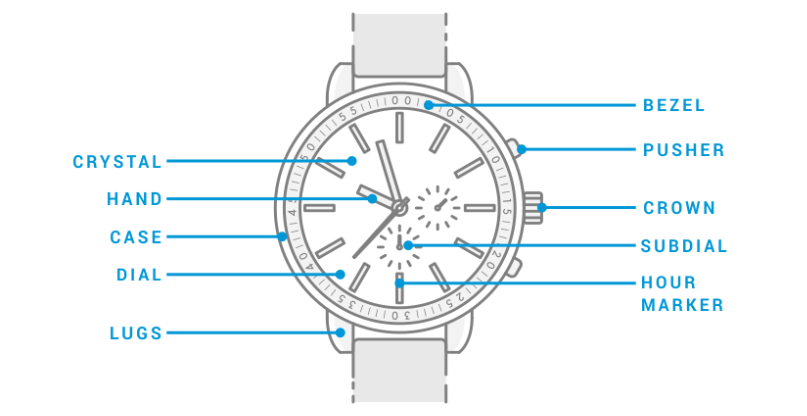
The watch diagram below outlines the basic elements in fine watches to build a basic understanding of their technical makeup. Understanding the anatomy of luxury watches will help in selecting the style of watch best fit for you. Let’s start with a rudimentary breakdown of a watch’s parts.

watch parts
Case
The case holds the inner working parts of the watch. Depending on the style of the watch, the case is usually made of stainless steel, because steel is resilient, handles light shocks that the watch could receive, and doesn’t tarnish. It can also be made of precious metals like gold or platinum, and can even be made of plastic in sports watches.

The case can also come in different finishes like high-polish, smooth, matte, or a combination of any of those. It also contains the movement itself, be it electronic (quartz) or automatic (self-winding). We’ll cover more on movements later.

Lugs
The lugs are where the case of the watch connects to the strap or metal bracelet of the watch, by use of metal spring bars.

Crown
The crown is what is used to change the time. Some watches offer a date window and a seconds indicator, which are engaged by pulling the crown out. Crowns on water-resistant watches screw down into the case. The crown can have embellishments like precious stones, to indicate luxury and attention to detail.

Strap / Buckle

watch basic
The strap/buckle secures the watch to your wrist and there are a number of materials commonly used for these parts. Leather straps range from calfskin to lizard and more exotic offerings like ostrich, alligator, crocodile, and even toad. Instead of a strap, a metal bracelet is a popular option. Other options are nylon straps (for sportiness), satin straps (for dressiness), and rubber straps (for diving/watersports).

Most watches allow straps and bracelets to be interchangeable so you can dress it up or down when you want to change the look of your watch. We have several articles on watch straps which can be found here.

Hands
The hands, usually broken down into hours and minutes, indicate the time. The hour hand is usually shorter in size than the minute hand. The hands can also have a slight design to them.

Other more complicated watches, such as chronographs (stop watches / timers), may have additional hands for their other functions, known as “complications”.

Bezel
The bezel is the outer ring of the case that connects to the lugs. It is typically a flat-edged surface, but can also be rounded. The bezel can also have embellishments, like precious gemstones in upscale watches, and may be a different metal than the case itself, as in some two-tone watches.

Watch Bezel

The above pictures show three different kinds of watch bezels. The one on the left rotates is Rolex Deepsea D-blue watch, allowing the user to “set” a different time zone. While the other two are fixed, such as the “fluted” bezel on the middle Rolex Datejust Rhodium Dial Jubilee watch, and rounded one on the right Patek Philippe Complications Wristwatch.

Crystal
Made of glass, plastic or synthetic Sapphire, the crystal is a transparent cover that protects the watch dial and reduces glare.

Dial / Face
A plate, with a metal base and visible through a crystal, that carries certain indication, such as the hours, minutes and sometimes seconds.

SUB-DIAL
A small dial placed inside the main dial on a watch’s dial that give information not provided by the main watch dial such as a chronograph.

Date Window
Considered part of the calendar family, a date window will be the only numbers found associated with the date. Popular places to find the date window are: 3 o’clock, 12 o’clock and 5 o’clock.

MOVEMENT
Acting like an engine, a movement is the inner mechanism of a watch that keeps time and powers the watch’s functions.

PUSHER
Button(s) located outside of the case that control specific functions of the watch. Pushers are most commonly found on watches with a chronograph.

That’s all, next time we’ll talk more about the watch movement, Watch Complications (Functions) etc.

Share This:

Watch WATER RESISTANCE

While “water resistance” is a fairly common feature of most watches, there is a lot more to it than most people are aware of. Whether you’re a diving enthusiast, headed for a beach vacation, or just curious about water resistance, here are some advice and recommended precautions to help you keep your watch safe and protected for years to come.

WATERPROOF VS WATER RESISTANT

water resistant or waterproof
What does it mean for a watch to be “waterproof?”
The truth is that no watch is waterproof. There is always a limit to how much water pressure a watch can handle. The term “waterproof” implies that a watch can’t leak under any circumstance—that no moisture will permeate the case and get into the movement. However, under certain circumstances anything can leak. Therefore, in the watch industry, we refer to a watch’s ability to withstand water pressure as water resistance.

What does it mean if the back of my watch is stamped with “Water Resistant?”
A watch stamped with “Water Resistant” means that it is humidity-protected. It can endure a bit of water splashes from washing your hands or being caught in the rain. However, water resistance does not mean you should swim or shower with your watch on.

Water is the biggest enemy of a watch. If you go swimming or play sports, you should have your watch checked for an accurate reading of its water resistance levels every year. The outside case may look rugged and big, but the movement is very tiny and very delicate. The only thing that stands between your watch and water is a small gasket, a tiny O-ring that is usually made of rubber or silicon. Gaskets form seals around the stem of the crown, pushers, and correctors and sit inside the case and the crystal. Over time, they dry out and lose elasticity and the ability to form a proper seal. This explains why regular testing is so important for maintaining the water resistance of a watch.

What is an atmosphere or a bar?
These are the measurements used by the watch industry to denote the amount of pressure a watch can withstand, not the depth to which the watch can be worn. ATM stands for atmosphere. 1 atmosphere is equal to about 10 meters or roughly 30 feet. A bar is just another way of stating atmospheres.

How is a diver’s watch different from a complicated watch?
Diving watches are specifically engineered for heavy water usage and can withstand depths of at least 200 meters. They have minimal openings for water to permeate through with only one screw-down crown, sturdy case, extra heavy gaskets around the crystal, and extra heavy gaskets around the case back. If you are planning to regularly swim, dive, surf or boat while wearing your watch, a diving watch is an excellent option to consider.

WATER RESISTANCE TESTING

How often should I have my watch tested?
We suggest having a watch tested at least once a year, but much of this depends on one’s lifestyle. For example, a person who surfs regularly—going in and out of salt water and in and out of sandy places—should have his/her watch tested a few times a year. Salt water especially causes a lot of corrosion and wear and tear on all parts of the watch, which ultimately causes the water resistance level of the watch to drop over time.

What happens during a water resistance test?
Each watch is tested a little bit differently, but the most important thing is to first make sure that all the gaskets are sealed and water resistant. Over time, the gaskets will need to be replaced and lubricated.

SWIMMING & SHOWERING

What should I do if I accidentally go swimming with my expensive watch?
One drop of water inside the watch can do major damage. The first thing to do is place the watch on a lamp or hot plate or even a radiator to warm up the back. This will move the moisture away from the delicate moving parts. You should also continue to wear your watch all the time—even at night. Your body temperature will provide enough warmth to keep the moisture away from the movement. Once you get home, bring the watch to your nearest store to have it opened, dried and cleaned, and repaired of any water damage.

Can I shower with my watch on?
It is strongly advisable not to shower with your watch on. Shampoo, soaps and other liquids are highly corrosive to a watch’s delicate components and will wear it out much sooner. If you accidentally expose your watch to soap, you should rinse it off with fresh water and dry it as quickly as possible.

Can I go swimming with my chronograph?
While chronographs are very well-crafted timepieces and typically water resistant, they are not intended for swimming or diving. A chronograph is a complicated watch, which actually has several openings for water to enter: 2 push buttons, a crown, the crystal, and the case back gasket. At each of these points, there is a gasket that forms a seal, which protects the movement from water damage.

Here are some tips for protecting your chronograph when near water:

Never turn the bezel, adjust the crown, or push the pushers while underwater as this will break the seal of the gasket, leaving the watch open for water to enter.
Always check to make sure the crown is properly pushed in or screwed down to ensure that the gasket is fully sealed.
My watch says it’s water resistant up to 100 meters; can I dive into the pool wearing it?
Diving into a pool causes an immediate change in pressure—even though it only lasts for a few seconds—and can cause a major shock to a watch that is not meant for diving. Water resistance is all about pressure; the moment you hit the water, there is an immediate shift in pressure, which forces the watch to go above its recommended water resistance level. Diving into the pool multiple times (and smacking the water’s surface each time) will eventually push the amount of pressure applied to the watch over its limit, at which point water will be forced through the gaskets and into the movement.

Can I get my leather strap wet?
Leather straps should never get wet. Exposure to moisture, high humidity, direct intense light, cosmetic or oil products will cause the leather to deteriorate prematurely as well as stain or discolor the strap. If your leather strap accidentally comes in contact with any of these elements, dry the strap immediately with a soft absorbent cloth to help reduce any further damage.

Share This:

8 WATCH MATERIALS Used in Luxury Watches

Traditionally, gold has been the standard material used for watches, but over the years styles and looks have changed. Materials widely used in the automotive, medical, and aerospace industries have permeated horology, inspiring watchmakers to experiment with new lightweight elements and fusions such as:

Stainless Steel
Ceramic
Titanium
Carbon Fiber
Physical Vapor Deposition (PVD)
Diamond-like Carbon (DLC)
Gold
Rubber/Silicone

Let’s see their difference:

Stainless steel watches

STAINLESS STEEL

Made of iron-carbon alloy mixed with chromium and nickel

Features

  • Lightweight
  • Affordable
  • Highly corrosion-resistant

Other uses

Architecture, monuments, bridges, automotive and aerospace structures, surgical instruments

Ceramic watches

CERAMIC

Made of zirconium oxide, a non-metallic material created by the action of heating and cooling

Features

  • Durable, lightweight, scratch-resistant, smooth and modern
  • Can be produced in a variety of hues and finishes

Other uses

Jet engines, heat shield that protects NASA space shuttle

Titanium watches

TITANIUM

Titanium alloyed with iron, aluminum, vanadium, molybdenum, or other metals

Features

  • Lightweight, durable, dent and corrosion-resistant
  • Non-allergenic
  • Highest strength-to-weight ratio

Other uses

Aerospace, naval ships, performance/racing automotive, wide range of medical instruments and sporting goods

Carbon fiber watches

CARBON FIBER

Carbon thermally decomposed into braided fibers and surrounded by resin

Features

  • Tough
  • Lightweight
  • Contemporary style

Other uses

Aviation, military, space, aeronautic, and medical instruments

Physical vapor deposition (PVD) watches

PHYSICAL VAPOR DEPOSITION (PVD)

Steel with a vacuum coating of oxides, carbides or nitrides, deposited by ionic attraction

Features

  • Increased durability
  • Reduced friction on metal components

Other uses

Military, automotive, and aerospace

Diamond-like carbon watches

DIAMOND-LIKE CARBON (DLC)

Carbon coating with similar properties to diamond

Features

  • Ultra-hard with strong resistance to wear and scratches
  • Low friction; slick
  • Resilient to damage or coating dents from physical shock

Other uses

Engines of modern super sport motorcycles, Formula 1 race cars, NASCAR vehicles, aeronautics

Gold watches
GOLD

A metal in which fineness (the percentage of pure gold versus the percentage of base metals) is expressed in karats. 18 karat gold (75 percent pure gold) is standard for watch cases and high grade jewelry in white, yellow, rose and red gold. This is obtained by adjusting the proportions of copper and silver in the 25% of the alloy not consisting of gold.

Yellow Gold

To create the beautiful color of yellow gold, pure gold is alloyed with a combination of silver and copper. The bold color creates a timeless and classic look for a fine timepiece that will never go out of style.

White Gold

To create the stunning color of white gold, pure gold is alloyed with a combination of nickel, copper, zinc and palladium. A common color choice in watches, white gold is a more subtle look over yellow gold.

Red/Pink/Everose Gold

To create red or pink gold, pure gold is alloyed with a combination of copper and silver. Rolex’s Everose gold uses platinum in their combination as well. Recognized for its distinctive color, it is a very popular and fashionable option in watches today.
Rubber Silicone watches

RUBBER/SILICONE

A rubber-like material comprised of silicon, carbon, hydrogen, and oxygen

Features

  • Heat and cold resistant
  • Good weatherability
  • Water repellent
  • Pleasant to the touch with a high-grade feel

Other uses

Medical applications, consumer electronics, office automation, automobiles, electrical wiring, food

Share This: