画廊

How To Clean Your Watch to Make It Look New Again?

You’d never wear the same pair of socks every day without washing them. The same goes with shirts and just about everything else we put on our bodies. However, there’s often one exception: a watch Opens a New Window. —specifically the strap. Just like any other material, your watch strap can get dirty, smell, and even be ruined without proper cleanings.

Here’s how to safely clean your watch bracelet or strap at home.

Noted: Please be careful of your watch to avoid the water inside, scratches or damage when you’re cleaning.

Step 1: Separate the band

If you have a removable band on your watch, it is a good idea to separate it from the face and the mechanical part of the watch for the cleaning. This is because you should avoid getting those parts of your watch wet.
If you aren’t able to remove it, don’t worry. You just need to make sure that you don’t damage to working parts when you apply the cleaner.

Watch Band style:

* Clean a Metal Watch Bracelet with Soap and Water

Most watch bracelets can be quickly cleaned with a polishing cloth. Work a polishing cloth in between the alternating links by bending the bracelet and rubbing the cloth against the grooves. This should easily loosen and wipe away any surface dirt.

* Clean a Leather Watch Strap

After you have removed the leather strap from the watch, gently rub a leather cleaner—a little bit goes a long way—into the leather strap with a clean, lint-free cloth. Always do a patch test in a discreet area of the watch strap before using it all over.

To preserve the integrity of your leather watch strap, limit the number of times you clean it with a leather cleaner. Heavy duty leather cleaners like saddle soap can soften (and eventually weaken) the leather so do not use it more than twice a year. Instead, get in the habit of regularly wiping it down with a soft, lint-free cloth and swiping a damp cloth over it when you need a deeper clean.

* Clean an Exotic Leather Watch Strap

Although saddle soap is a reliable cleaning agent for smooth calfskin leather, skip it if you have an exotic leather watch strap. Saddle soap can get trapped in the thin grooves of a textured alligator, crocodile or lizard leather strap, leaving behind a white crust. Instead, use a cleaning product specifically made for exotic leather.

Beeswax is an alternative gentle cleaner. Simply rub the beeswax onto the watch strap with a soft, lint-free cloth. Let the strap dry away from direct sunlight. Once dry, buff it with a soft cloth. But, before you coat your alligator watch strap in beeswax, do a patch test in a discreet area of the watch strap to ensure it does not discolor the leather.

If you’re nervous about cleaning the exotic leather, safe yourself the stress and bring it to a professional watchmaker for a safe cleaning.

* Clean a NATO Watch Strap

A fabric NATO strap is the easiest watch strap to clean—lucky you. Simply use a little mild dish soap and warm water and gently scrub the strap. Rinse it thoroughly and set it on a flat surface, away from direct sunlight, to air dry.

Do not use any kind of heater or hair dryer to try and expedite the drying process. You run a serious risk of melting or burning the strap. Be patient and let it just air dry.

Step 2: Choose a cleanser

You should use a mild soap or rubbing alcohol for most types of watches. If you have a gold watch, or it is made of silver or a platinum material, you might consider using a small amount of jewelry cleaner. Using water alone is not going to be very effective.
If you do use some water, make sure that it is mixed with a mild soap (such as dish soap) and don’t get the inside wet.

Step 3: Use a soft cloth or a soft toothbrush

Don’t use a scrubber sponge, a hard bristle toothbrush or paper towel. Abrasive materials can add scratches to your watch that you don’t want. Make sure that you use a soft material to wipe away stains, oils and germs. Rub gently in a circular motion to clean your watch.

Step 4: Make sure it’s dry

It is important to make sure that you remove all of the moisture from the band of the watch, and any other part of the watch that may have gotten wet. Even though you do not use very much liquid during the cleaning process, you will want to make sure that there isn’t any moisture left.

If you leave it wet, mildew might develop, and you don’t want that on your watch! Also, depending on the material it is made out of, wetness can cause rust. Make sure that you take a smooth, dry cloth and dry your watch well.

That is all. Now you can put your watch band back on and wear your watch. You might want to leave it alone for a while since you put the work into cleaning it, however. Anyway, that is all there is to it, and you can clean your watch every couple of months to keep it shiny and nice.

By the way, To clean the inner workings, take the watch to a professional.

Share This:

3 TYPES OF WATCH MOVEMENTS

When you’re choosing a watch, there are many decisions you need to make. One of the most crucial choices is which type of movement. For those of you who are not familiar, the movement of a watch refers to the mechanism behind how it ticks.

A movement is what makes a watch “go.” (It’s also known as a “calibre”) is the engine of a watch that acts as the powerhouse to make the watch and its functions work.

Below listed 3 Common Watch Movements

1. Quartz Movement
An easy way to differentiate a quartz from a mechanical movement is by looking at the second hand. On a quartz watch, the second hand has the tick-tick motion that moves once per second while mechanical watches have a smooth, sweeping seconds motion.
It’s powered by a battery.

Quartz movements are very accurate and require minimal maintenance aside from battery replacements. They tend to be low cost since they are battery powered and have few moving parts. Quartz watches aren’t as desirable to most watch enthusiasts because they lack the technical craftsmanship and engineering that mechanical timepieces have. Quartz movements in fine Swiss watch brands。

2. Manual-Wind Movement
Considered to be the most traditional movement, manual movements are the oldest type of watch movement. Manual-wind watches that we carry are often loved for their beautiful display of the watch movement, which can usually be seen through the case-back. These movements are often referred to as “hand-wound movements” because they have to be manually wound by hand to create energy in the watch’s mainspring.

Manual-wind watches have a fixed power reserve and need to be wound relatively frequently since there is no automatic or self-winding element to the movement.

3. Automatic/Self-winding Movement
Movement is a mechanical movement first marketed in the beginning decades of the 20th century. It winds itself while worn on the wrist, eliminating the need for daily hand winding. However, if not worn for some time, the watch will stop and require a manual winding. This does not include taking the watch off before bed.

Watches with automatic movements are very popular because the wearer doesn’t have to worry about winding the watch daily to ensure constant operation. As long as the watch is worn regularly, it will maintain power without requiring winding.

Share This:

Luminor Panerai Watches For Sale

High quality Panerai Watches For Sale

Men watches – 316L Steel – automatic movement, working very well.

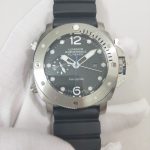
  1.  Panerai Luna Rossa Challenger Submersible Watch – Ref. PAM1039
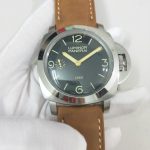
  2.  Panerai Luminor 1950 Watch – Ref. PAM00614
  3.  Panerai Luminor 1950 Watch – Ref. PAM00127
  4.  Panerai Luminor Automatic Watch – Ref. PAM00320
  5.  Panerai Luminor Power Reserve Regatta Automatic Watch – Ref. PAM00222

Share This:

XF Factory – New Cartier Santos Quartz Watch Pre-sale!

New Cartier Santos watches in men or ladies size

1:1 copy – Quartz movement, working very accurately

Extra -thin – Most accurate – light weight in the market

Two hands color on this version, one is black hands, one is blue hands. Very beautiful!

Share This:

How to Protect Your Watch?

Protecting your watch is essential to the effective operation and long life of any watch. Making your favorite timepiece last is simply a matter of regular awareness and regular maintenance.

First, Avoiding Harm

1. Wear any bracelets or chains on your other wrist


Wrist jewelry has the potential to scratch either the sides or the face of your watch. Only fabric or thin leather bracelets would be acceptable along with a watch. Avoid metal on the same wrist, no matter what. Friendship bracelets, knitted and crocheted bracelets are not harmful either.

2. Keep it out of extreme temperatures

 
Specifically no warmer than 140 °F (60 °C) and no colder than 32 degrees. High heat or cold may affect how lubricants inside the mechanics of the watch allow it to operate.
The temperature doesn’t have to be extreme to be harmful. For example, the considerable heat generated by a warm shower along with the humidity involved make a dangerous environment for a watch.

3. Take it off for high activity


If you know you’re going to play sports or go rock climbing, leave your watch off to avoid damage. While most watches can take some hits, too many will add up to serious damage. This too is why you must always avoid dropping the watch. The mechanics inside it can also get banged-up too much.

Alternatively, purchase an inexpensive watch that you wouldn’t mind getting dirty or scratched. There are also more pricey options designed for wear and tear if you’re unable to avoid high activity entirely.

4. Leave it off when applying fragrance or cosmetics


While acceptable to the human body, some chemicals in cosmetics may interfere with water resistance or the operation of the watch. Keep your watches out of your bathroom while you ready yourself for the day. As a rule, have the watch be the last thing you put on when dressing.

5. Keep your watch away from magnets


Usually found in televisions or laptops, keep your watch away from common electromagnetic devices. Never allow your watch to rest on your laptop. Magnets may adversely affect how the metal components inside the watch work which in turn will affect its operation. This will not apply to digital watches, or any watch which does not rely on gear mechanics.

If unavoidable, look for “anti-magnetic” watches which include technology to prevent damage from magnets.

Second, Maintaining and Storing Your Watch

1. Get regular maintenance
Take your watch to a professional to be serviced every three to four years. Make sure to have your water resistance tested after every battery change; the act of changing the battery compromises the water resistant seal. If your watch is a Quartz time piece, you may want to consider having it serviced entirely after every battery change.

2. Keep your mechanical watch wound
If you have a mechanical watch (it should not say “quartz,” “kinetic,” or “eco-drive” on the face) it will need to be rewound every once and a while to maintain the time. Unscrew the crown of the watch (if necessary) and begin to turn it clockwise (away from you). This may take anywhere from 20 to 40 turns. Stop winding once you encounter resistance, then turn back the crown five or six turns to reset the lubricant and reduce some of the strain on the watch’s mechanics.

3. Clean your watch often
Dip your watch in warm, slightly soapy water. Rinse it with clean water and dry it with a soft cloth. Do this every couple of weeks, or whenever your watch gets dirty. Regular brushing with a soft toothbrush is also helpful to get rid of tiny debris or anything stuck in the wrist band.

4. Store in a dry place
Humidity and dust are the two main dangers in storing your watches. Have designated dry place (away from your bathroom is a general tip) and try to keep the original packaging of all your watches for an easy storage space. Never store your watches face down to prevent scratching the face. Be sure to wear any one of your watches from time to time to monitor their operation; don’t let a broken watch gather dust.
If you’re storing watches near one another, make sure to have something to keep them from contact, to avoid scratches. For something on the cheap use acid-free tissue paper wadded up as an effective barrier.
Don’t use bubble wrap as protective storing. The packaging can retain moisture, causing rust or other damage.

Share This: